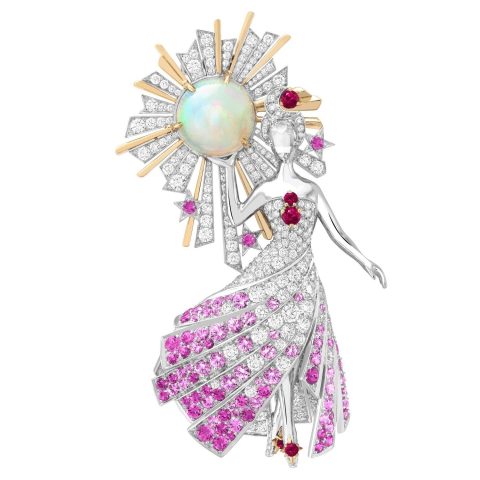
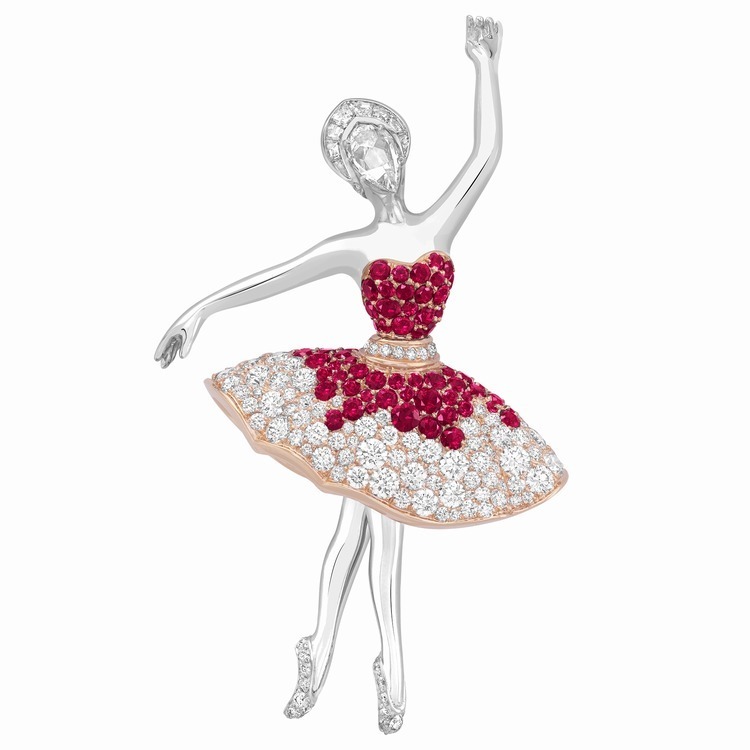
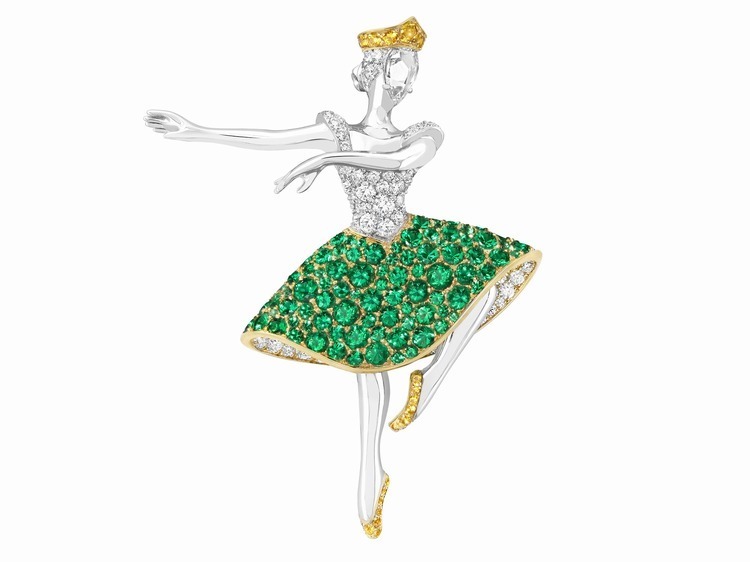
Van Cleef & Arpels’ connection with the art of dance dates back to the 1920s. Louis Arpels, one of the brand’s founders, had a particular fondness for ballet and frequently attended performances at the Palais Garnier in Paris with his nephew. The graceful movements of the dancers became a significant source of inspiration for jewelry creation, most notably embodied in the “Ballerina” brooch series born in the 1940s.
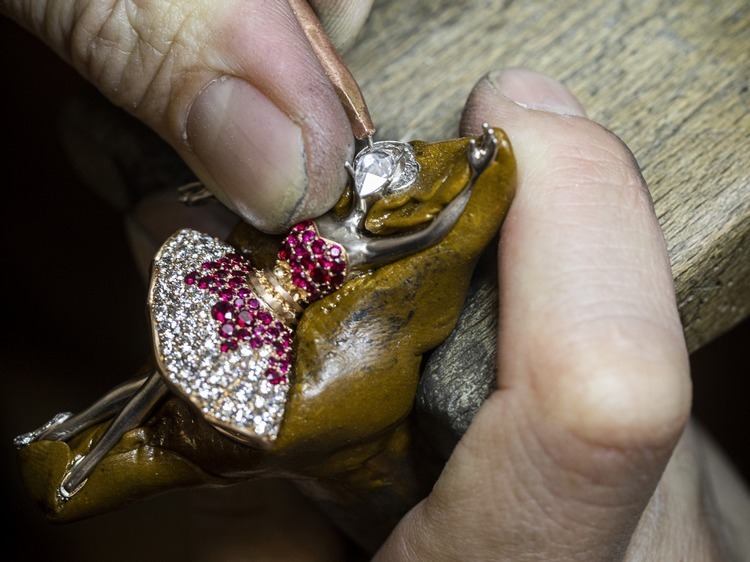
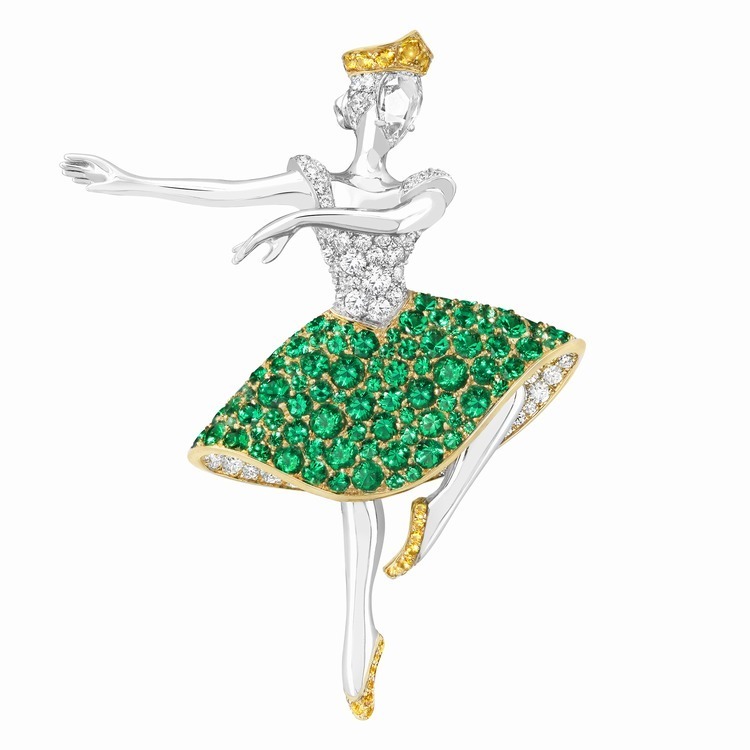
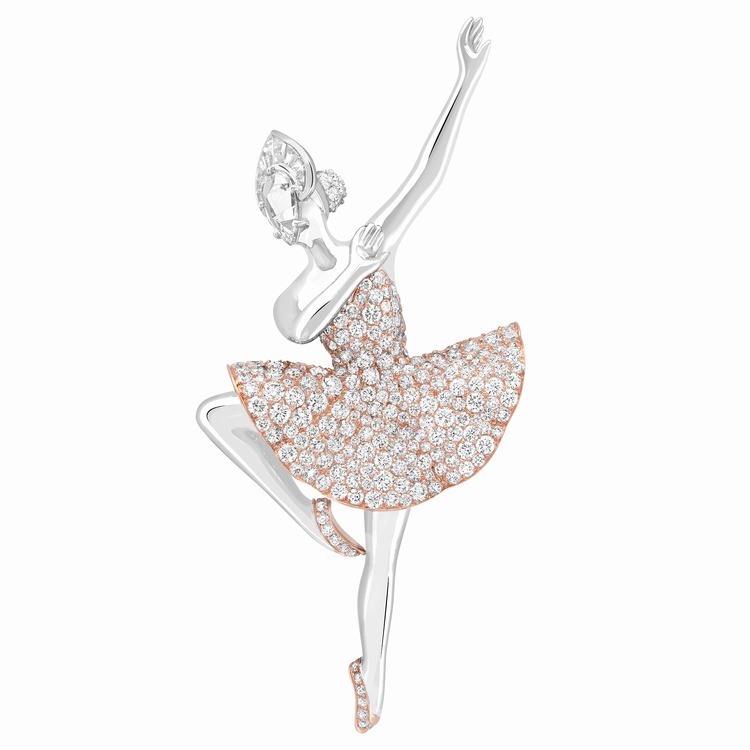
These three brooches use white gold to sculpt the slender and graceful figures of the ballet dancers. Each dancer’s face is set with a drop-shaped rose-cut diamond. The tutu, flaring out like flower petals, becomes the focal point of the design, creating a realistic effect of the dancer’s elegant silhouette.
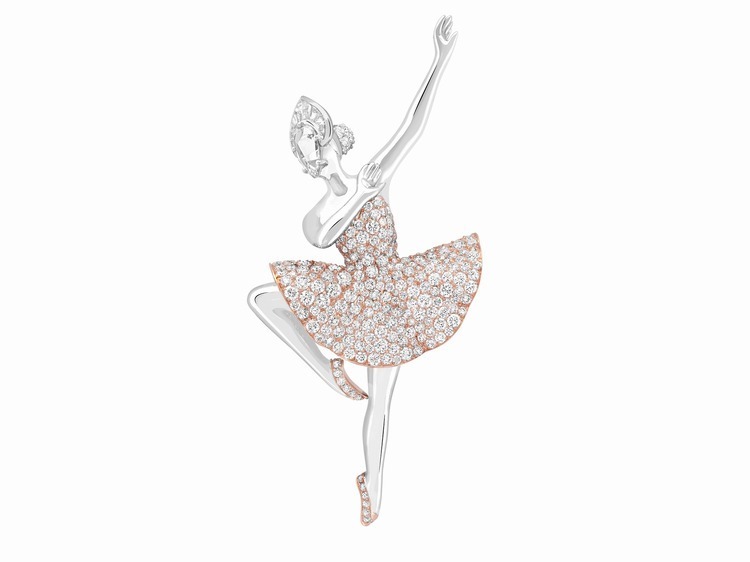
Camille captures the moment a dancer spins into motion. The yellow sapphire crown echoes the slippers, while the skirt, paved with emeralds using the snow-setting technique, reveals a gold hemline and an inner lining of round diamonds.
Dulcinea freezes the instant before a dancer performs a cat-like leap, recreating the dream goddess “Dulcinea” from the ballet “Don Quixote.” The beautiful dance attire, on a rose gold base, shimmers with diamonds that seem to sway with the dance steps.
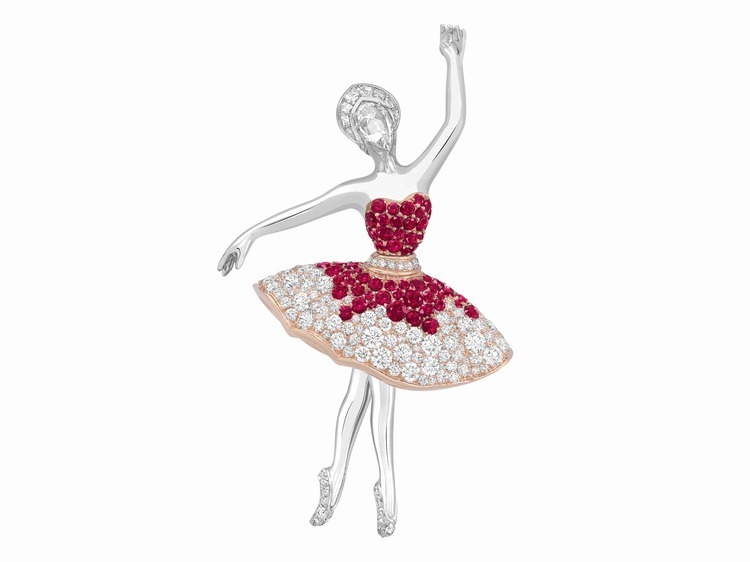
Albertine portrays the ballerina on pointe, capturing the graceful posture of beginning a dance. Inspired by French choreographer Roland Petit’s classic ballet “Proust, ou Les Intermittences du coeur,” the raised rose gold skirt of the heroine Albertine is intertwined with rubies and diamonds, while a line of round diamonds at the waist defines her slender figure.



![Cartier Cartier Clash [Un]limited jewelry set](https://luxurywristclub.com/wp-content/uploads/2025/10/Cartier-Cartier-Clash-Unlimited-jewelry-set.jpg)