There is a moment in fine jewellery-making that has no mechanical equivalent: the moment a craftsperson takes a polished surface and, with nothing but a rotating cutter and perfect rhythm, covers it in pattern. Watchmaking shares that moment with the jewellery bench, and few current watches express it as literally as the new Favre Leuba Chief Tourbillon Guilloché, a limited edition of 25 pieces whose cornflower-blue dial is engraved entirely by hand on a rose engine lathe built in the late 19th century.
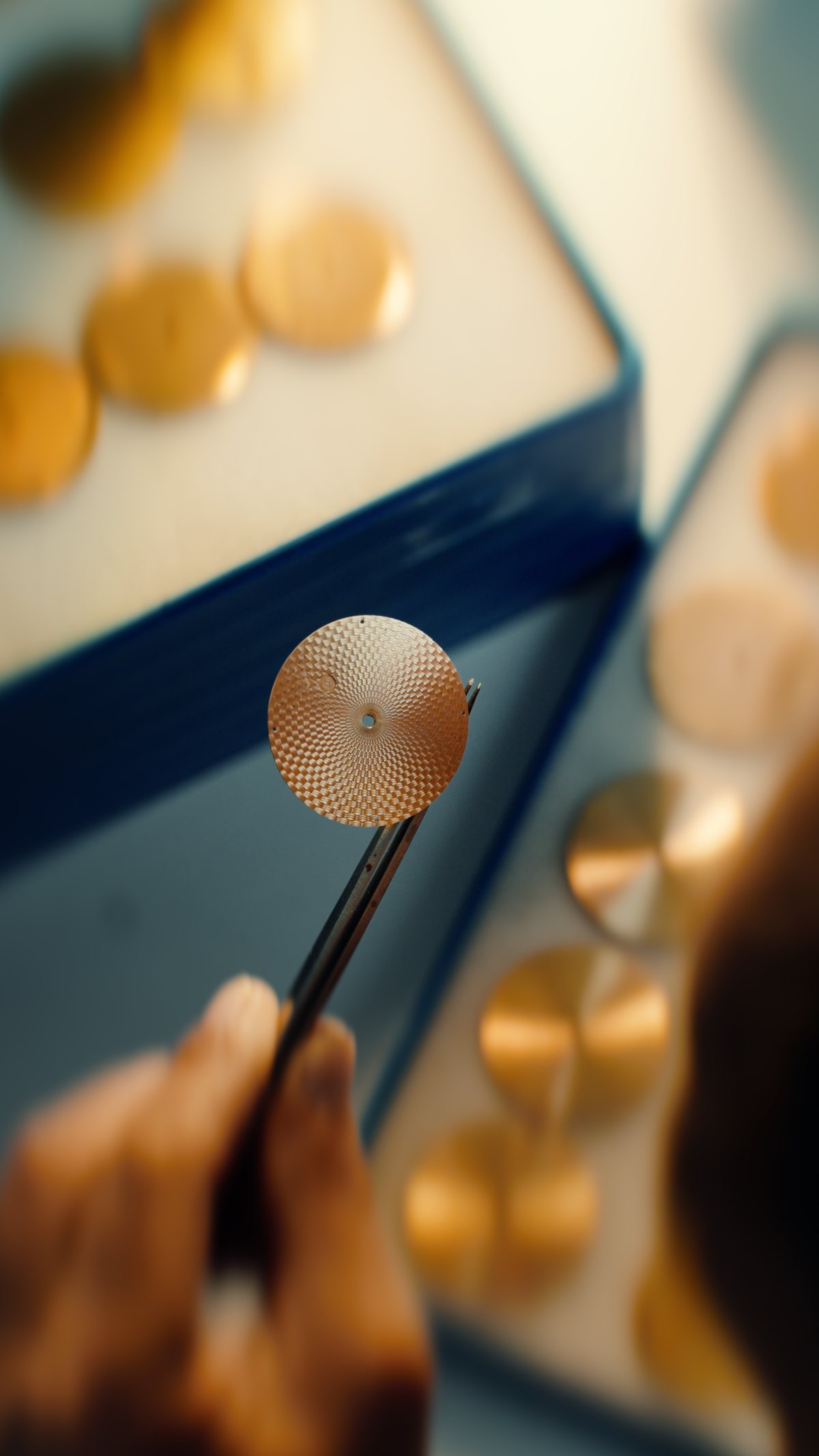
Guilloché (or guilloche, depending on which side of the Atlantic you grew up on) is the same decorative technique you will find on Fabergé cigarette cases, antique enamel lockets and the delicate engine-turned backs of vintage powder compacts. A rose engine rocks and advances the workpiece against a small cutter, producing repeating patterns — barleycorn, clous de Paris, sunburst — that catch the light differently at every angle. On the Chief Tourbillon Guilloché, the chosen pattern is grain d’orge, barleycorn, radiating outward from the centre of the dial. Each dial demands a minimum of five to six hours of uninterrupted, zero-margin-for-error work.
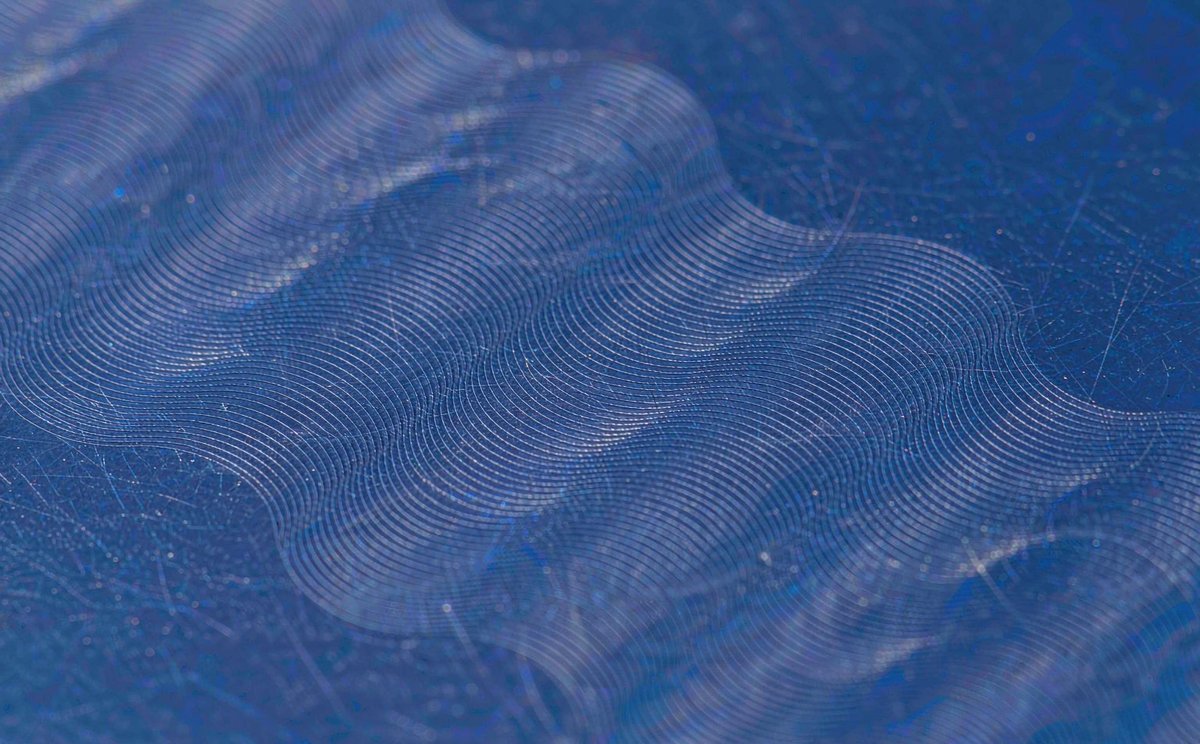
The result is a dial that behaves like fine metalwork rather than a printed surface. In direct light the barleycorn ridges sparkle; in shadow the pattern almost disappears into a single deep blue plane. That is precisely the quality collectors prize in vintage guilloché dials — light that moves when you do — and it is why hand engine-turning remains the preserve of a small number of specialists rather than a stamping press.
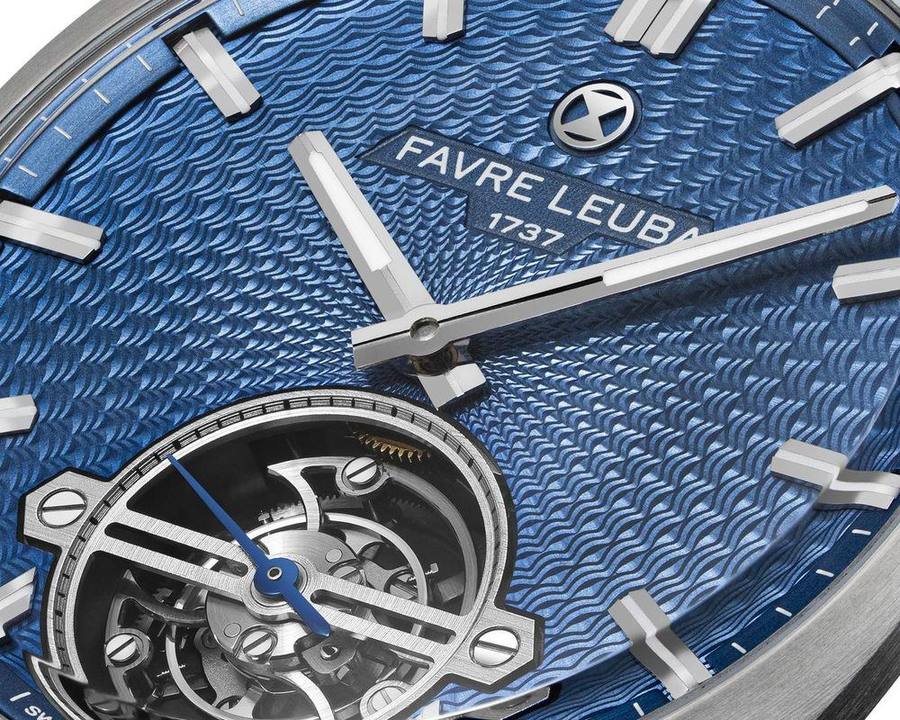
Favre Leuba finishes the canvas deliberately simply. Polished rhodium-plated hour indexes and matching hands are filled with Super-LumiNova C1 X1, which glows an unexpected blue at night — a practical touch on an otherwise artisanal piece, and a small reminder that the brand still sees the Chief as a wearable sports-dress hybrid rather than a safe queen. The small seconds hand, mounted on the tourbillon carriage at six o’clock, is flame-blued steel.
How It Wears — and What to Pair With It
The cushion-shaped steel case measures 41 mm across and 11.45 mm thick, with vintage-inspired contours that bow outward between the lugs. On the wrist the integration matters more than the numbers: the watch arrives on a brushed-and-polished steel bracelet with ‘H’-shaped links, and an interchangeable blue FKM rubber strap is included for warmer-weather wear.
For those of us who think about watches and jewellery together, the blue guilloché dial opens up a pleasant styling space. The cool cornflower blue sits comfortably next to white gold and platinum pieces, and against a grey flannel cuff or a navy knit the engraved texture reads almost like woven fabric. Blue FKM strap on a summer weekend; bracelet and a plain silver chain when the watch needs to hold its own at dinner.
Under the Pattern
The dial artistry would be window dressing without a serious engine beneath it, and here Favre Leuba repeats the recipe of the 2025 original: the manual-winding calibre FL T01, developed with Jean-François Mojon of Chronode — a movement maker whose résumé includes work for MB&F, Czapek and Hermès. The one-minute tourbillon runs at a traditional 21,600 vibrations per hour and the barrel delivers about 60 hours of power reserve, with hours, minutes and small seconds displayed from the cage itself.
Patrik Hoffmann, CEO of Favre Leuba, put the intent plainly: “With this new edition, we elevate the Chief Tourbillon through the artistry of hand-guilloché, giving each dial its own unique character and making every timepiece truly one of a kind.”
Price and Availability
The Chief Tourbillon Guilloché is limited to 25 pieces, priced at USD 34,500 / EUR 30,000 / GBP 26,000 / CHF 26,000 — a CHF 1,200 premium over the original edition, which sold out after its March 2025 launch. Every watch ships in a wooden presentation box with a spare rubber strap, a commemorative medallion and a watchmaker’s loupe, a nicely old-fashioned nod to the craft on display.
For collectors who found the first Chief Tourbillon’s sculptural, geometric dial a touch industrial, this edition trades edge for heritage — a warmer, more romantic expression of the same tourbillon, and arguably the more jewellery-minded of the two.