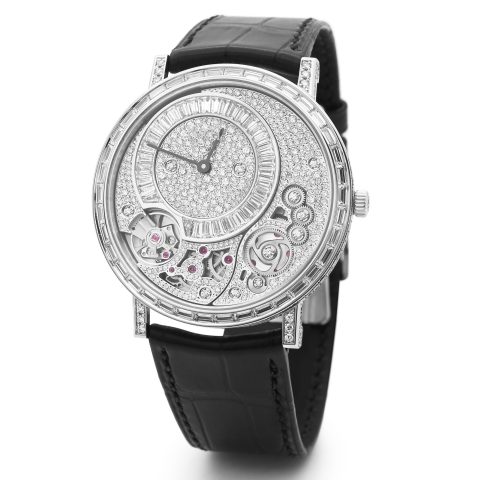
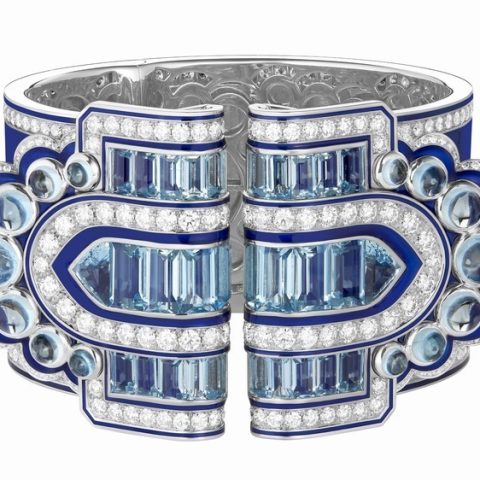
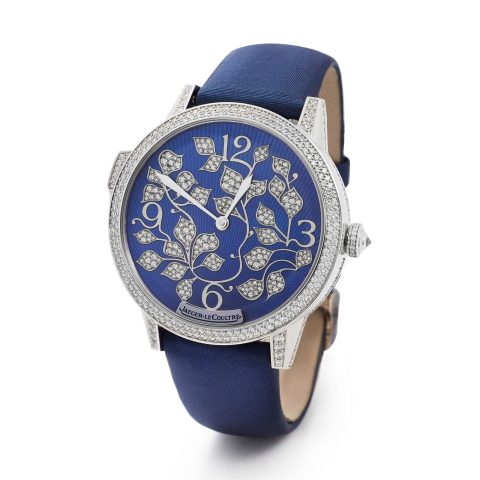
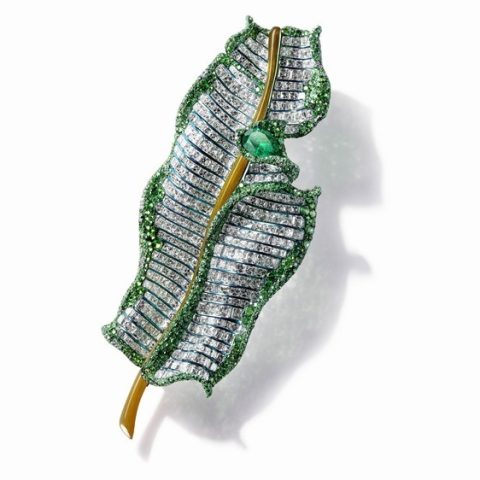
 The Chopard Copacabana kaleidoscope collection embodies the vibrant spirit of luxury and the beauty of Brazilian culture. Each piece is meticulously crafted to reflect the dynamic colors and patterns inspired by the iconic Copacabana beach. This collection not only showcases innovative design but also celebrates the allure of timeless elegance.
When Alessandro Michele unveiled the third chapter of the “Hortus Deliciarum” (Garden of Delights) collection, the fashion world witnessed a stunning narrative of travel and history. Among the standout pieces in this high jewelry collection is the exquisite Gucci Hortus Deliciarum Tourmaline Ring. This piece serves as a bridge between the romanticism of the Grand Tour and the structural boldness of the mid-20th century.
While many high jewelry collections focus solely on floral motifs, the Gucci Hortus Deliciarum Tourmaline Ring takes a distinct turn towards architectural grandeur. It invites the wearer to step into a time machine, turning the dial back to the 1930s and 1940s—an era defining the modern metropolis.
The Industrial Inspiration Behind the Gucci Hortus Deliciarum Tourmaline Ring
The design philosophy behind the Gucci Hortus Deliciarum Tourmaline Ring is deeply rooted in the aesthetics of the industrial era. It interprets the soaring skylines of a booming metropolis, capturing the spirit of skyscrapers and steel structures that defined the period.
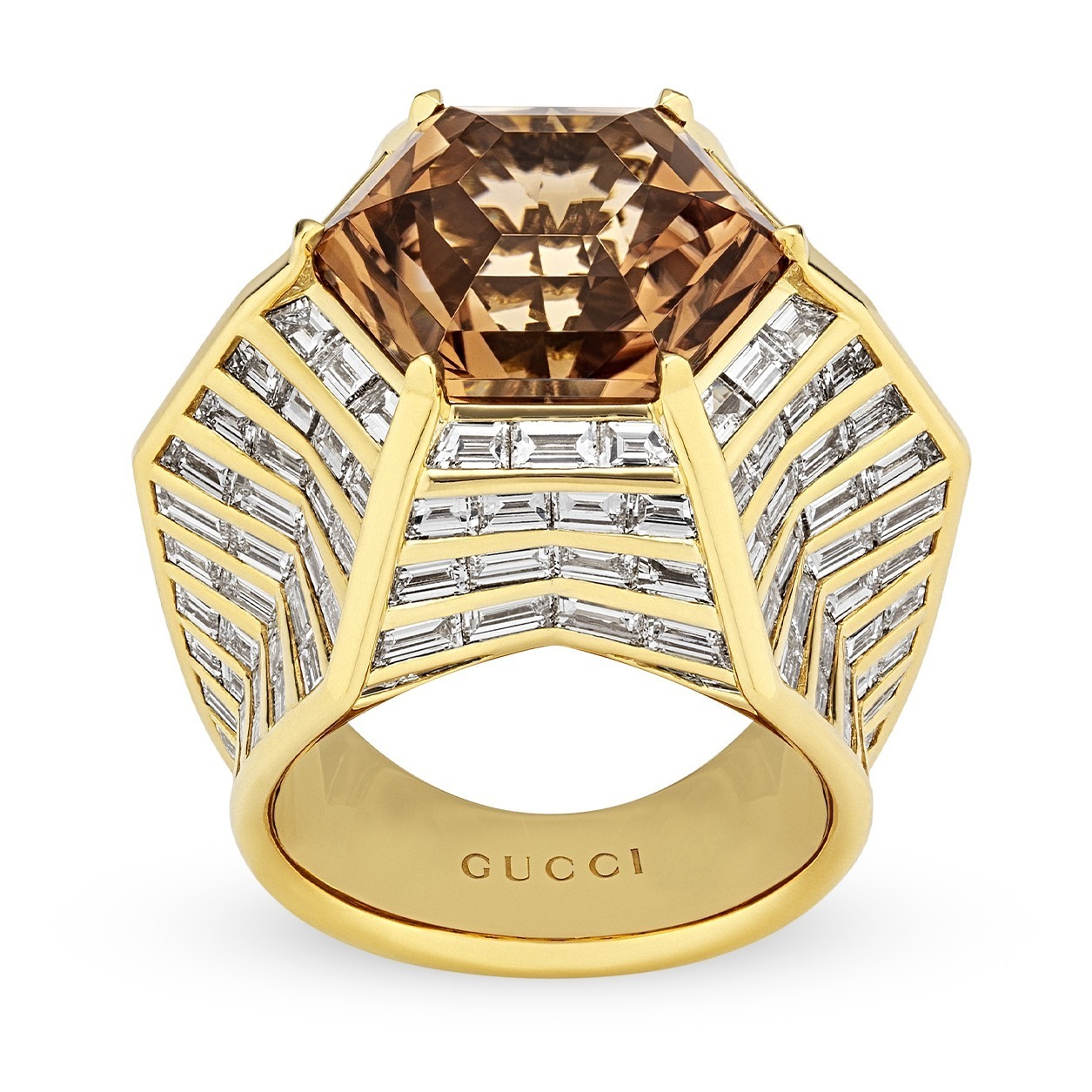
The ring does not merely hold a stone; it builds a monument around it. The structure presents an abstract geometric architectural style, reminiscent of the Art Deco movementwhere symmetry, vertical lines, and bold geometry reigned supreme. The gold setting is crafted to form six groups of three-dimensional geometric facets. These facets rise up to meet the center stone, much like the converging lines of a towering building viewed from the street level.
Gemological Features of the Gucci Hortus Deliciarum Tourmaline Ring
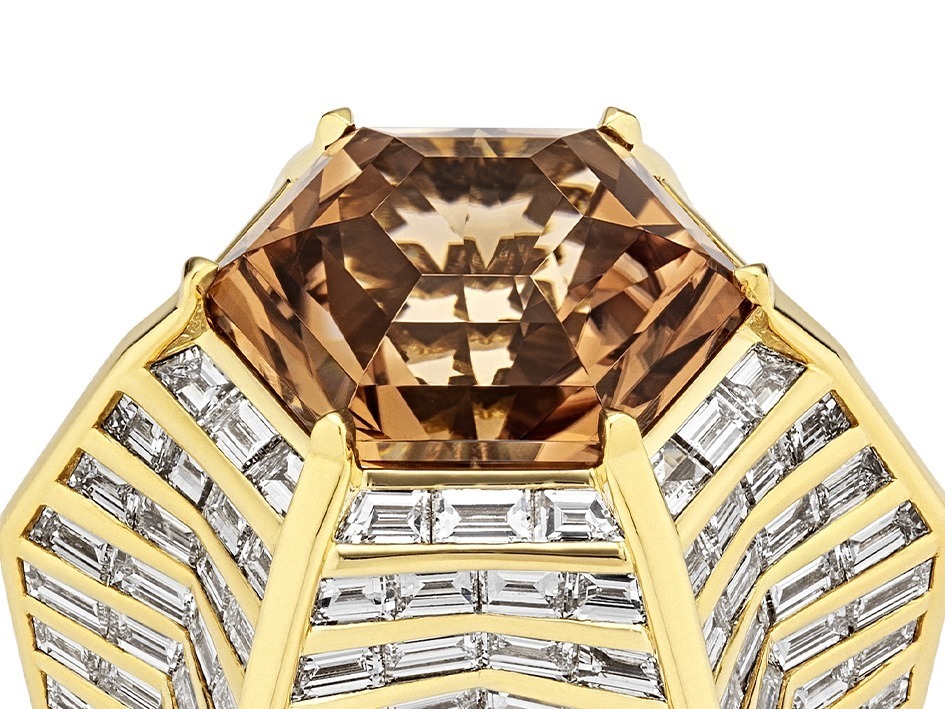
The undisputed protagonist of this ring is the mesmerizing golden-brown tourmaline. Deviating from standard oval or cushion cuts, this gemstone is cut into a rare hexagonal shape. This choice of cut is deliberate, reinforcing the mechanical and geometric theme of the piece while showcasing the gem’s transparent and crystalline quality.
Gemology enthusiasts analyzing the Gucci Hortus Deliciarum Tourmaline Ring will appreciate the technical prowess on display here. According to the Gemological Institute of America (GIA) tourmaline is known for its strong pleochroism and distinct optical properties. Due to the relatively high birefringence (ranging from 0.018 to 0.040) inherent to this natural gemstone, a visual phenomenon known as the “doubling” effect can be observed.
When looking through the table (the flat top) of the tourmaline, the facet edges on the opposite side appear doubled and overlapping. This is not a flaw, but a celebrated characteristic of the mineral. In the Gucci Hortus Deliciarum Tourmaline Ring, this effect creates a scattered, kaleidoscopic play of light, delivering a visually captivating and almost dizzying depth that draws the eye inward.
Setting Technique in the Gucci Hortus Deliciarum Tourmaline Ring
Supporting the central tourmaline is a feat of diamond setting that rivals complex engineering. The six faceted sections of the gold band are paved with over 200 custom-cut baguette diamonds. Unlike round brilliant diamonds, baguette cuts are step-cut, offering a hall-of-mirrors effect that perfectly complements the vintage industrial theme found throughout the Gucci Hortus Deliciarum Tourmaline Ring design.
The arrangement of these diamonds is meticulously planned. They are stacked like translucent bricks, building layered and spiraling staircases that lead up to the hexagonal master stone. This arrangement demonstrates remarkable visual tension and dynamic movement. For collectors interested in unique diamond settings, this piece represents the pinnacle of Italian craftsmanship.
The craftsmanship required for this setting is immense. Each baguette diamond must be custom-cut to ensure seamless alignment along the curved and angled surfaces of the gold mounting. There are no gaps, only a continuous flow of brilliance. Their translucent, icy quality naturally complements the warm, golden-brown hue of the tourmaline center stone, creating a sophisticated contrast between warm and cool tones.
Conclusion
The Gucci Hortus Deliciarum Tourmaline Ring is more than an accessory; it is wearable architecture. By combining the historic allure of the 1930s metropolis with exceptional gemological characteristics and precision diamond setting, Gucci has created a timeless piece that anchors the “Hortus Deliciarum” collection in history and luxury.










![Cartier Cartier Clash [Un]limited jewelry set](https://luxurywristclub.com/wp-content/uploads/2025/10/Cartier-Cartier-Clash-Unlimited-jewelry-set-480x480.jpg)